
Unable to play here. Open the product teaser directly ↗
Intelligence through interaction
Human
interaction.
Machine
understanding.
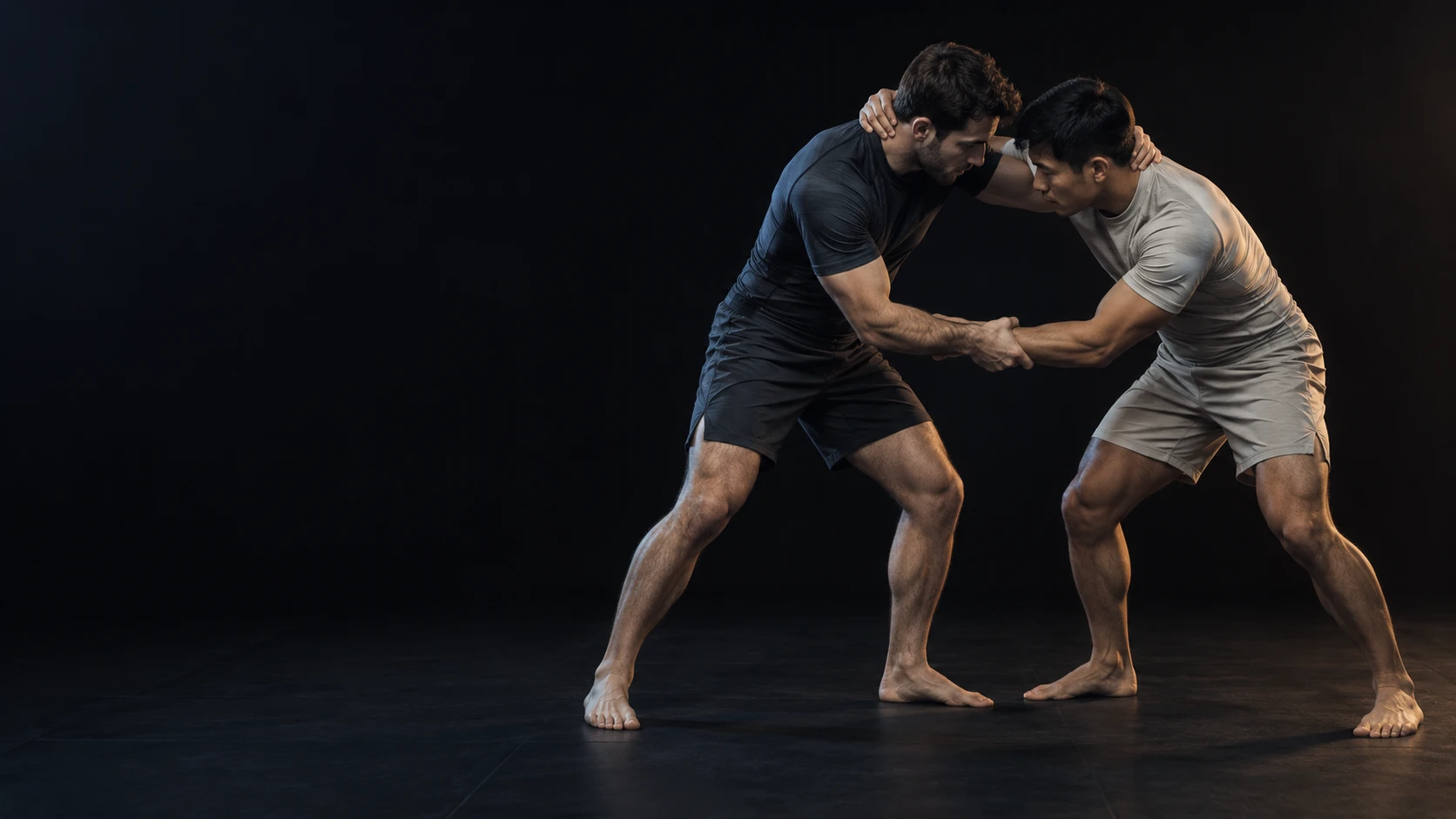
We’re developing AI to understand how people move, adapt and interact. Beginning on the mat.
Human contact. A new depth of understanding.AI-generated illustration · not model output
Watch Luctaris
The vision.
The story behind it.
See the training experience, then explore the wider vision and development strategy.
Unable to play here. Open the teaser video directly ↗
Beyond the Mat
September 2026Unable to play here. Open the investor deck video directly ↗
The Luctaris thesis
The products, the data strategy and the planned path to a corpus of permissioned human-contact evidence.
Seed deck v3 · Updated October 12, 202601 / The thesis
Useful to people.
Meaningful to machines.
The app is the capture engine.
The corpus is the company.
Understanding physical interaction takes more than video. It takes context: what an athlete intended, what actually happened, and what a coach would change.
Our products are designed to bring those perspectives together. The long-term asset is a growing collection of permissioned, expert-reviewed evidence for learning about human contact.
Video evidence+Athlete context+Expert feedback
02 / The connected platform
Three perspectives.
One deeper understanding.
Training reflection, video evidence and expert coaching—connected by Luctaris Intelligence.
Product family in development
MatLog™ — AI-powered training journal

Remember the lesson.
Carry it into the next round.
A training journal designed to turn an athlete’s voice or written reflection into a structured record of focus, experience and progress.
- Capture goals and post-session reflections
- Connect recurring themes across training
- Add the context a camera cannot see
ContributesIntent & training context
RollLens™ — AI-powered video analysis

See the moments
that move you forward.
Video review designed to help athletes and coaches locate meaningful positions, transitions and patterns, with AI suggestions people can correct.
- Review rounds in their original context
- Check and correct proposed events
- Connect observations to video evidence
ContributesMovement & contact evidence
Coach Console™ — AI-powered coaching workspace

Keep the expert
at the center.
A coaching workspace designed to organize reviews, clarify AI suggestions and turn a coach’s feedback into actionable guidance for athletes.
- Review shared footage and athlete context
- Approve, correct or reject AI suggestions
- Follow recommendations into later sessions
ContributesExpert correction & feedback
03 / The learning loop
AI proposes.
Athletes correct.
Coaches approve.
Better understanding begins with the people who know the session. Every review should lead to something an athlete can apply—and return to.
Designed to flag uncertainty and defer to human review when the evidence is insufficient.
From one session to the next06 stages
Capture the whole session.
Bring video, athlete goals and post-training reflections into the same record. Capture starts with clear permissions.
From feedback to research. With separate permissions, footage, reflections and corrections become candidates for expert labeling, quality checks and approved research use. Product activity does not automatically enter a training dataset.
04 / The research direction
Start with the observable.
Build toward the possible.
Our first research focus is contact perception in sport. Broader applications will need their own evidence, evaluation and validation.
Initial focus
Understand the interaction.
Develop and evaluate recognition of positions, transitions and contact events in grappling. Connect each proposed observation to footage a person can review.
Research layer
Preserve how it is known.
Keep directly observed movement, participant-reported intent, model inference and instrument measurements distinct. Video alone does not establish force or physical stress.
Long-term direction
Learn beyond the mat.
Explore whether validated contact data can support human–robot interaction, assistive technology and supervised training. Transfer to each field must be demonstrated.
What comes next
The proof of concept is designed to test recognition quality, coach acceptance, consent rates and the cost of usable data—before scaling collection or making performance claims.
05 / Built on permission
People are the source.
Trust is the foundation.
Our design principle is simple: people should understand how their participation and feedback may be used.
01
Separate choices
Service, research and commercial uses need distinct, explicit permissions. Research participation should be optional.
02
Evidence with its history
Keep permissions, corrections, review decisions and permitted purposes attached to the data.
03
Governed use
Quality review and rights checks must precede release. Withdrawal requests need documented handling across downstream uses.
The next conversation
Let’s build a deeper
understanding.
For academy leaders, research collaborators, prospective design partners and investors who share the vision.
Start a conversation